←︎ Back Microeconomics › Economics of Marriage, Sex & Divorce
1 / 31

Economics of Marriage, Sex & Divorce

Microeconomics · Special Topics
Richard Posner, Sex and Reason (1992)
“the subject is not only rich in analytical and historical interest but also, as is almost too obvious to mention, of enormous practical significance, and this quite apart from its traditional and now declining importance to the future of the human race. A major source of human pleasures and pains (the latter including death long before AIDS came on the scene), of human institutions, of political controversy, perhaps even of the growth and decline of nations, it deserves our best intellectual efforts.” Richard A. Posner, Sex and Reason, Harvard University Press (1992), p. 1
The provocation. Sex, marriage, and divorce are markets. People respond to incentives. The law sets prices. If you find that unsettling, you are already thinking like an economist.
Gary Becker, Journal of Political Economy (1973)
“The neglect of marriage by economists is either a major oversight or persuasive evidence of the limited scope of economic analysis.” Gary S. Becker, “A Theory of Marriage: Part I,” Journal of Political Economy 81(4), 1973, p. 814
The Becker framework. Marriage is a gains-from-trade arrangement. Two people form a household when the output of that household exceeds what each could produce alone. Marriage occurs “if, and only if, both of them are made better off, that is, increase their utility” (p. 816).

The economic skeleton

  • Bride prices and dowries are prices, reflecting the scarcity of spouses and the gains from forming a household.
  • Exit costs determine bargaining power inside the marriage. A spouse who can leave has more leverage.
  • The law decides who can divorce, on what grounds, and at what cost. It sets prices, not moral verdicts.
Part 1

History of Marriage

Bedding rituals, consummation, and the closing of a legal transaction

The 1654 Swedish royal bedding ceremony

  • Guests in the royal bedchamber watched the couple placed in bed. This was the legal closing of the transaction.
  • The tradition ran from royalty to peasant weddings. In fifteenth-century Sweden, sexually suggestive songs were expected.
  • This was not embarrassing theater. The witnesses were the documentation.
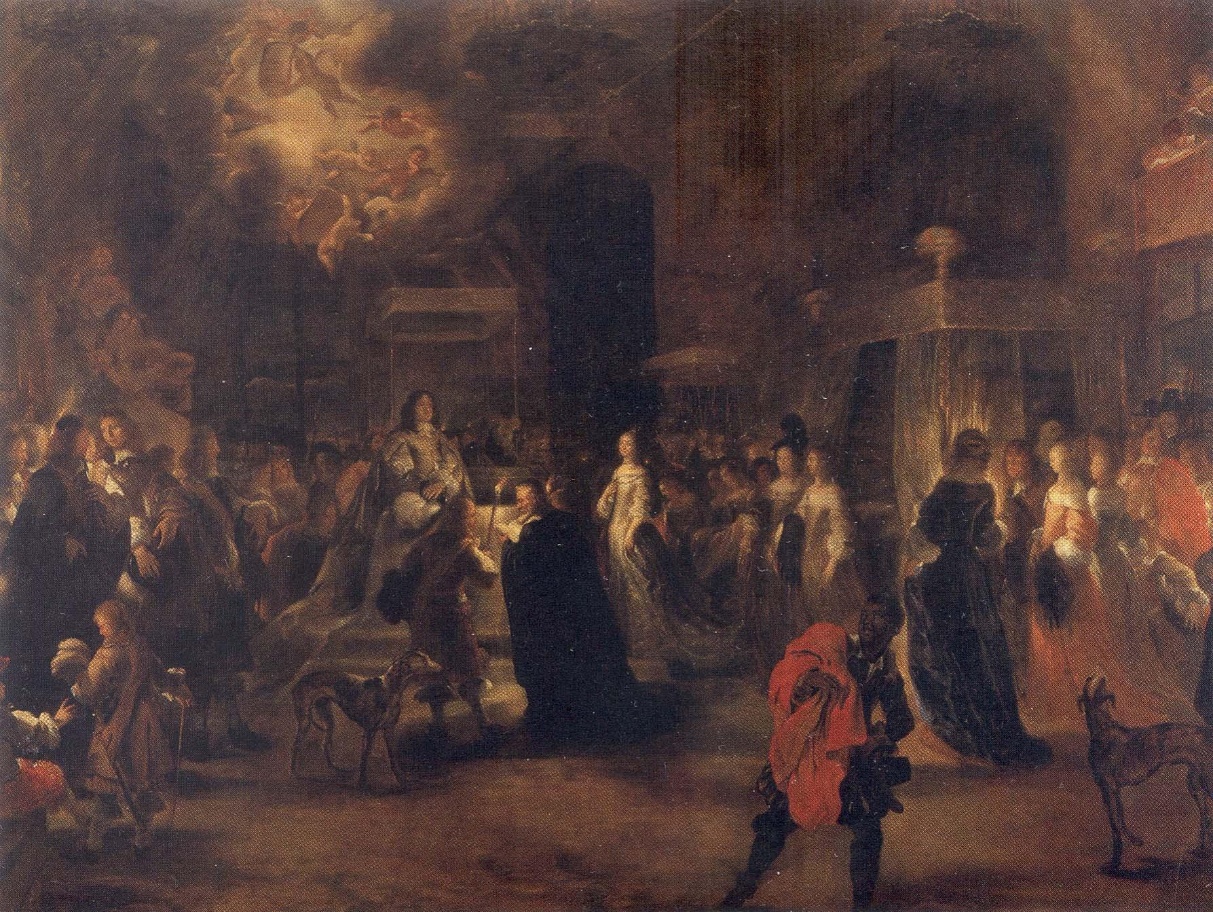
The Marriage of Charles X Gustavus, 1654
The Marriage of Charles X Gustavus, 1654, by Jurgen Ovens.

Melusine Manuscript Illumination, 1468

  • The illumination was commissioned to give validity to the House of Lusignan’s founding union. A dynasty needed a properly consummated origin on record.
  • Illuminations show bedding rituals were common for royalty back to the eleventh century.
  • Consummation was a recognized legal requirement even for a mythological marriage. The illumination existed to make that clear.
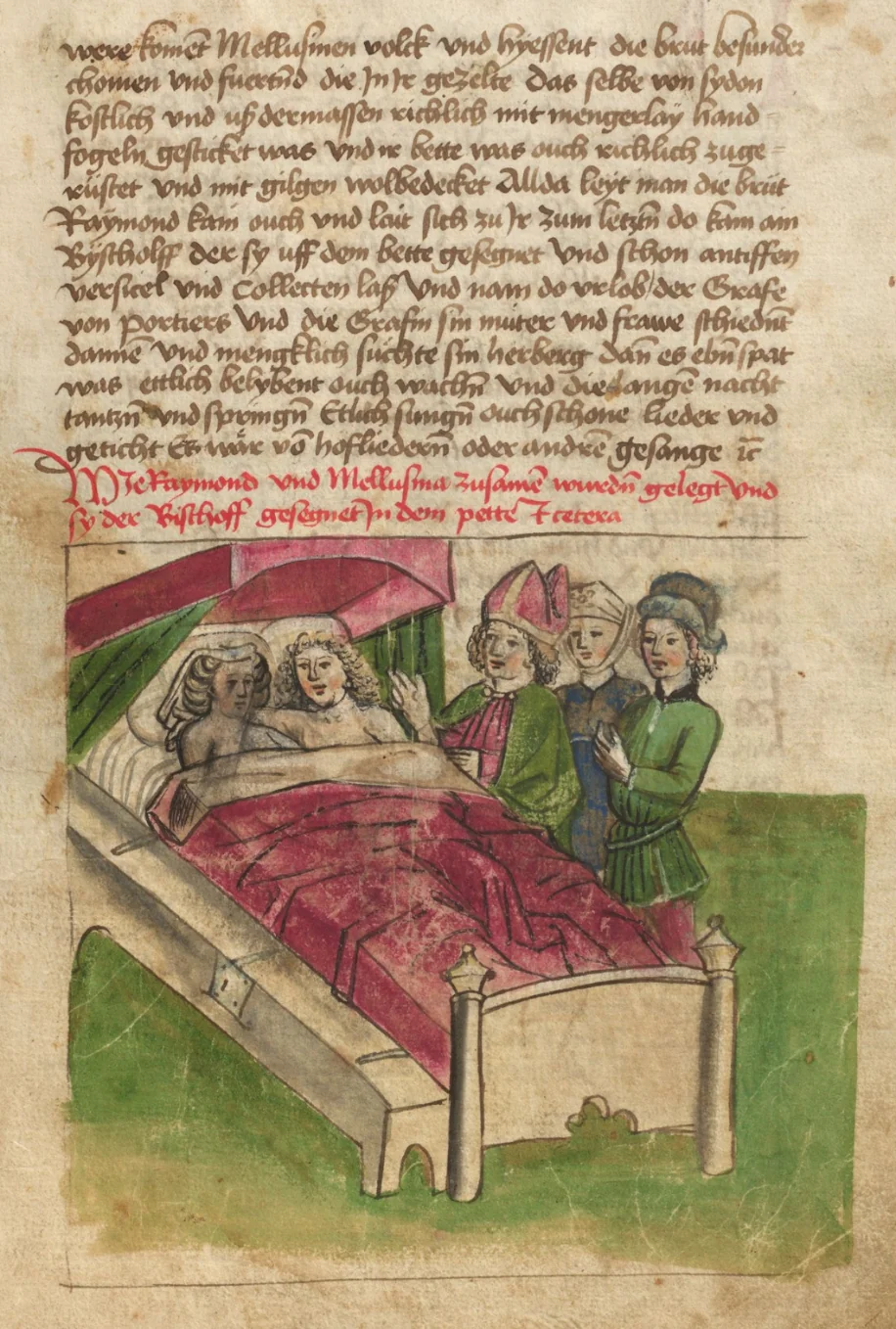
Melusine Manuscript Illumination, 1468
Germanisches Nationalmuseum. (1468). Melusine [Manuscript illumination, Hs. 4028, fol. 41r].

Begetting of James the Conqueror, c. 1207

  • Peter II refused to consummate. A knight substituted the queen for one of his consorts in the dark.
  • Outside waited fifty-seven nobles and clergy, kneeling by candlelight while notaries drew up documents.
  • At dawn they entered with candles. The king drew his sword, then knelt weeping, and the child born that night became James the Conqueror.
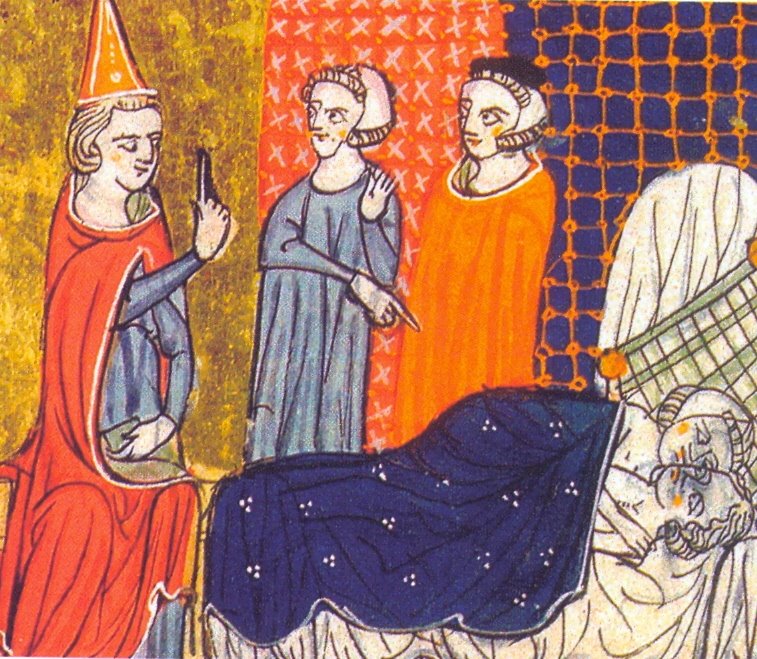
Begetting of James the Conqueror, c. 1207
Begetting of James the Conqueror, consummation of Maria of Montpellier and Peter II of Aragon (c.1207).

Ritual Defloration, Mandeville, 1484

  • Where bedding ceremonies were absent, ritual defloration by a male authority figure served the same verification function.
  • The form differed across cultures but the function was the same, to publicly establish a completed union.
  • When the ceremony faded, sheet inspections took its place. The need for verification outlasted the ritual.
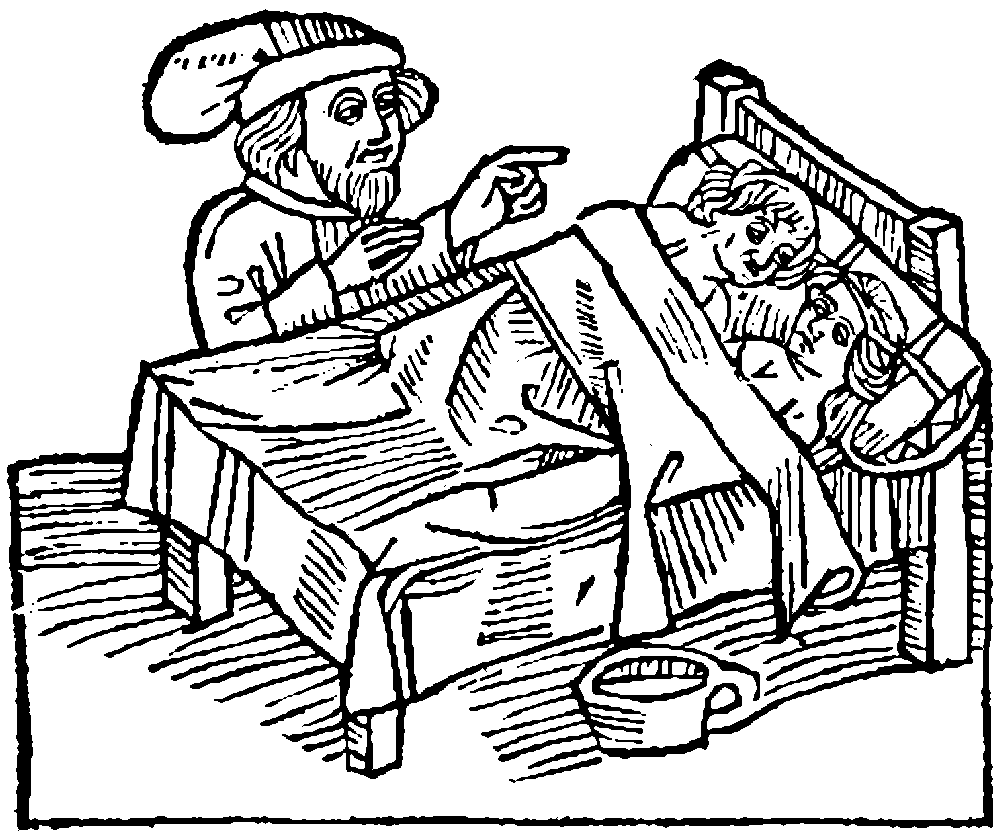
Ritual Defloration, Mandeville, 1484
Ritual defloration in the travel book of Mandeville, ed. 1484, book 4, chapter 7, fol. 8v. Image sourced from Wettlaufer (2000).

Why consummation had legal force

  • Marriage transferred property and established heirs. Consummation was performance of the contract’s core obligation.
  • In Brace v. Cudworth, a bride who fled fifteen minutes before the bedding was granted an annulment on this ground.
  • Without consummation, paternity was uncertain and property rights were incomplete. The transaction was not done.
Voidable marriage. A valid marriage that can be annulled at the request of one of the parties, typically due to failure to meet a legal requirement such as consummation.

Econsummation

“Econsummation: Rational Choice of Bedding Rituals”
  • In northern Europe, sex during engagement was expected. Virginity verification was not the point of the ritual.
  • Bishops were caught accepting bribes to overlook bedding rituals. The Church’s bans failed for centuries.
  • Royalty sometimes required completely uncensored viewing of consummation. The poverty theory is wrong.
The argument. Bedding rituals were efficient responses to adverse selection and commitment credibility problems. They disappeared when legal institutions no longer needed them.

Why did societies across history invest so much effort in publicly verifying that a marriage had been consummated?

Who stands to lose if the marriage is not consummated? Whose property is at stake? Why would fifty-seven nobles and clergy be present at all, and who pays them to be there?
Part 2

The First Divorces

Criminal conversation, adultery as a tort, and the economics of marital breach

Criminal conversation

  • Crim. con. let a husband sue his wife’s paramour for money damages, a tort not a crime, coined as a euphemism in 1716.
  • Only husbands could sue. The wife was the subject of the transaction, not a party to it.
  • Before crim. con., the alternatives were dueling and murder. The tort made the paramour’s life safer.

Sir Richard Worse than Sly, 1782

  • Worsley sued for £20,000. The bathhouse attendant testified he had boosted Bissett to the window himself.
  • Twenty-seven of Lady Worsley’s prior affairs were documented, several apparently staged by her own husband.
  • The jury awarded one shilling. Gillray’s caricature “Sir Richard Worse than Sly” finished his political career.
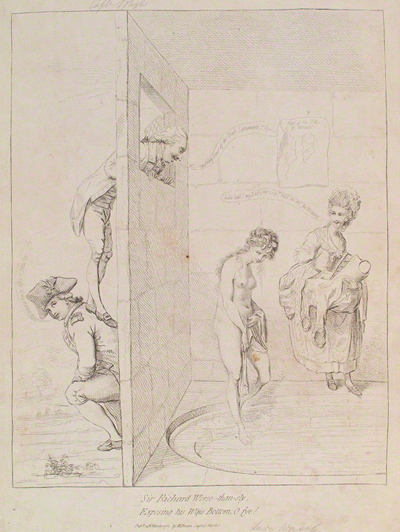
Sir Richard Worse than Sly, 1782
Drawing of an eyewitness account of a criminal conversation. National Portrait Gallery, London (1782).

Browne v. Blake, 1817

  • Blake was Browne’s closest friend, godfather to his child, and lender of £1,000, and he offered to settle the case in horses.
  • Counsel included a young Daniel O’Connell. The defence alleged Browne had wagered five thousand guineas on his own wife’s fidelity.
  • Eight minutes of deliberation, then a verdict for the defendant, received with a burst of rapturous applause.
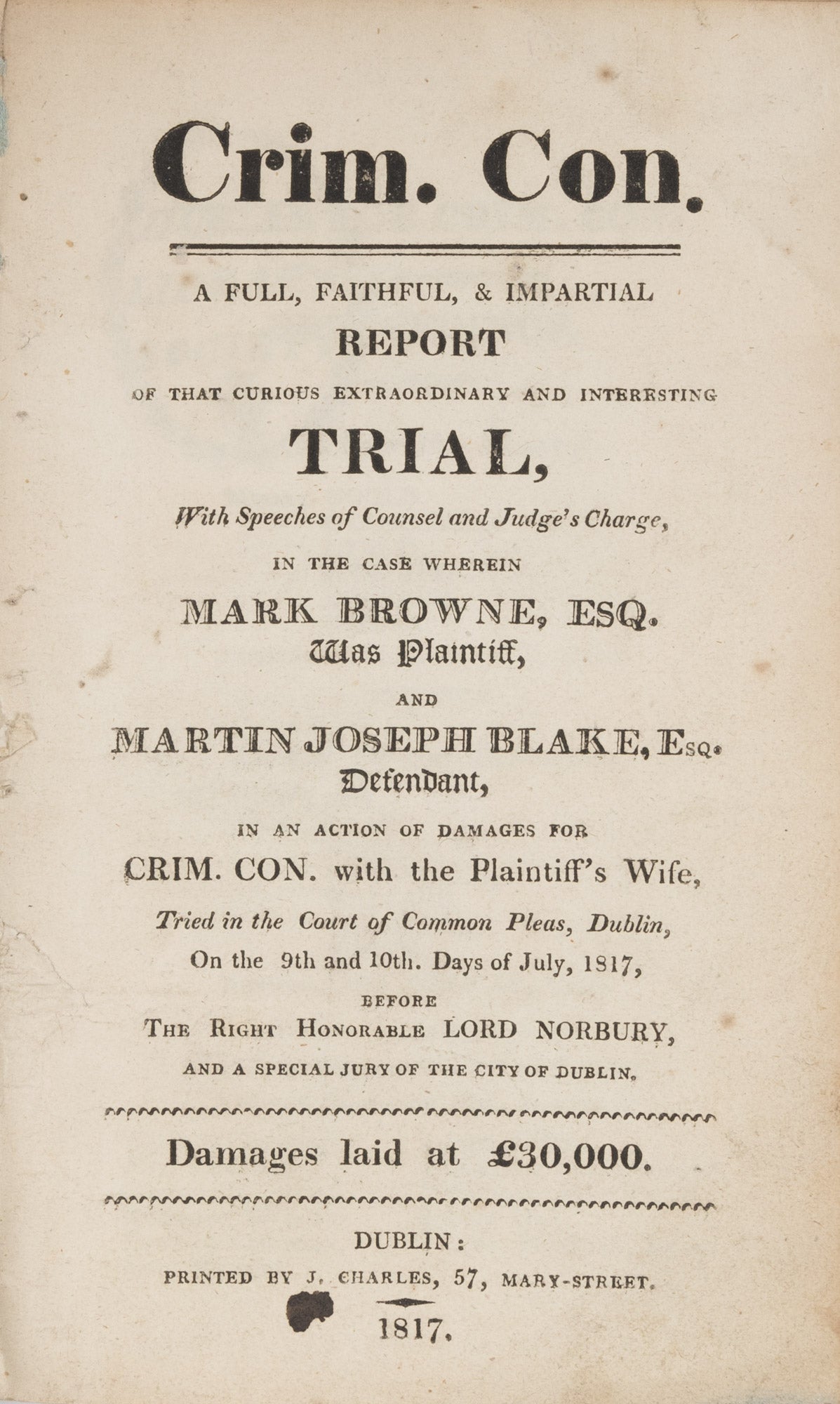
Browne v. Blake, Crim. Con. Trial Pamphlet, 1817
Criminal conversation trial pamphlet, Browne v. Blake, Court of Common Pleas, Dublin, 1817.

Cloncurry v. Piers, 1807

  • Gabrielli was a painter employed at the estate. From a ladder outside the window, he sketched what he had seen.
  • The jury awarded £20,000, among the largest crim. con. damages ever recorded.
  • Juries inferred the act from circumstantial evidence. A witness who could illustrate the scene was unusually compelling.
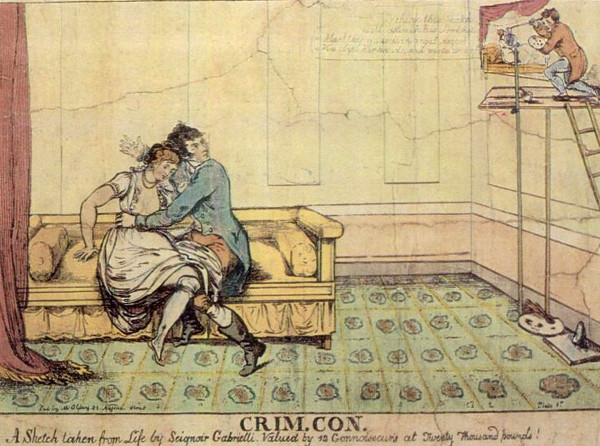
Crim. Con. sketch by Gabrielli
Crim. Con. A sketch taken from life by Seignor Gabrielli.

Caroline of Brunswick and Pergami

  • Caroline appointed Pergami her courier in 1814. Within months he was her chamberlain, and this painting was commissioned by her husband as evidence.
  • Government agents followed them through Italy and the Holy Land, documenting shared sleeping arrangements and Caroline bathing attended by Pergami alone.
  • When George became king, Caroline returned to claim her title. He responded with a parliamentary bill to dissolve the marriage.
Caroline of Brunswick and Bartolomeo Pergami
Caroline of Brunswick and Bartolomeo Pergami, commissioned by George IV.

The Trial of Queen Caroline, 1820

  • Caroline could not testify. Brougham privately warned the government that the king’s own secret marriage to Fitzherbert could be introduced.
  • The bill passed the Lords, but the majority shrank from 28 to 9. The ministry abandoned it rather than send it to the Commons.
  • Caroline was turned away at her own coronation. She died six weeks later, her coffin marked “the injured Queen of England.”
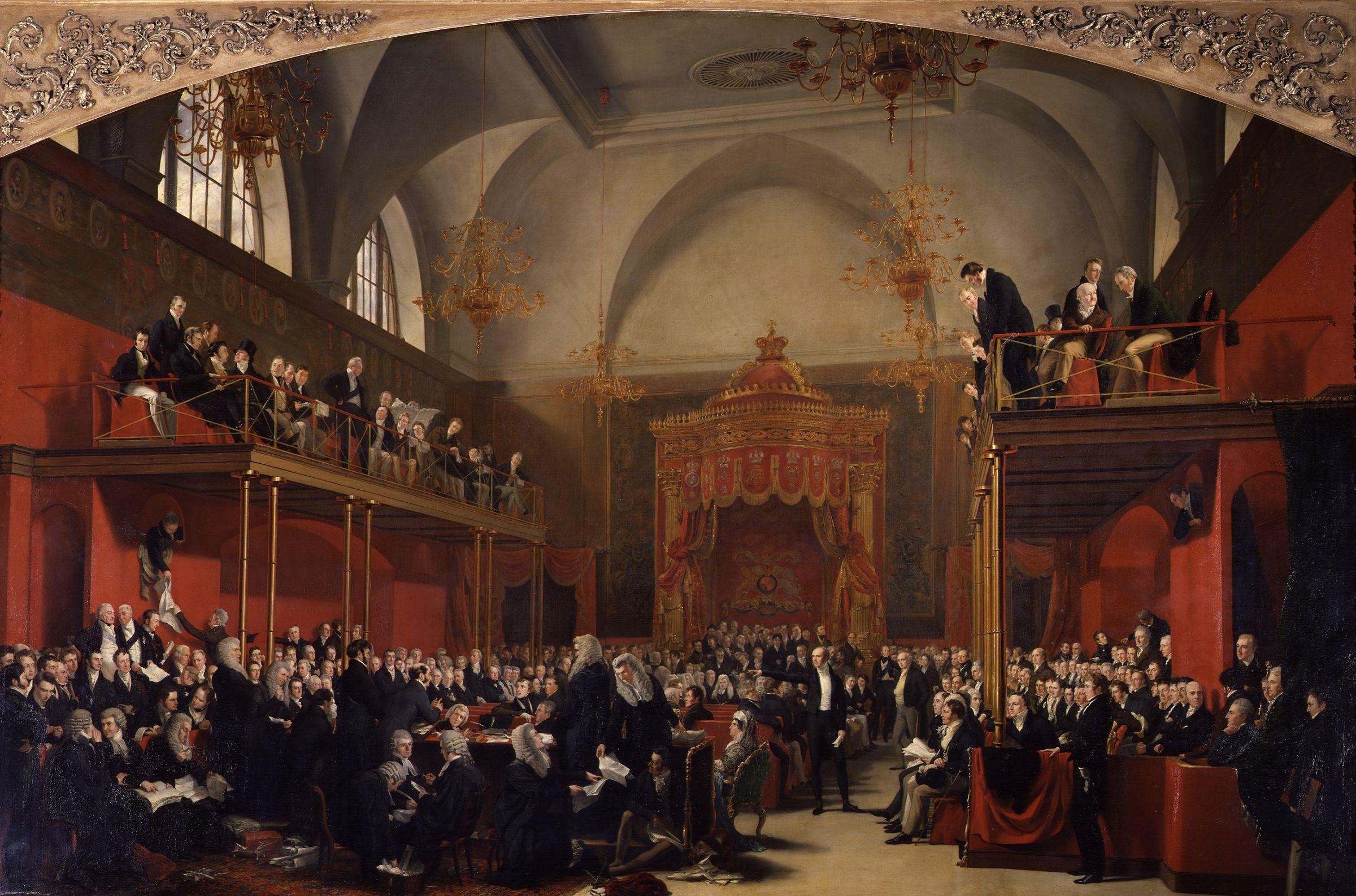
The Trial of Queen Caroline, 1820
The Trial of Queen Caroline.

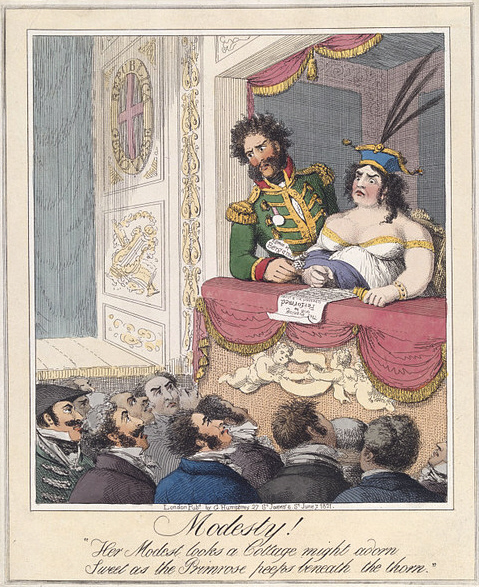
Caroline Norton and the Infant Custody Act, 1839

  • Norton filed crim. con. against the sitting Prime Minister. The jury acquitted without leaving the box.
  • Under coverture, Norton seized her manuscripts, income, and sons. She had no legal recourse.
  • Her campaign produced the Infant Custody Act 1839, the first statutory challenge to absolute paternal right.
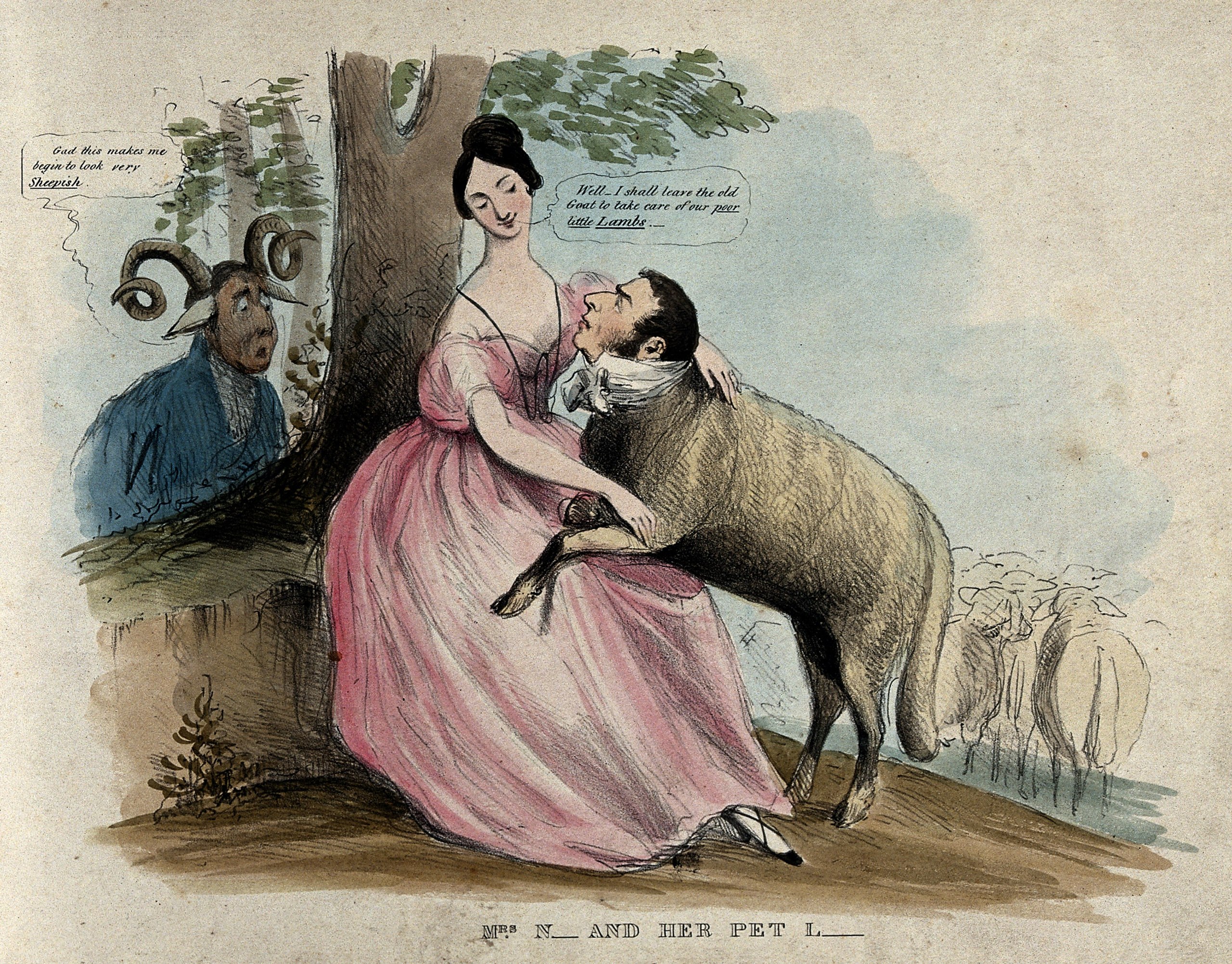
Mrs. N and Her Pet L, political cartoon, 1821
Political cartoon of the Trial of Caroline Norton. Published by G. Humphrey, London, 1821.

The economics of adultery as a tort

  • Crim. con. forced the adulterer to internalize the cost imposed on the husband, which is the standard law-and-economics justification for tort liability.
  • If the gain from adultery exceeds the husband’s loss and the adulterer can compensate, the breach is efficient, and crim. con. implemented exactly this logic.
  • Lord Eldon told Parliament nine out of ten cases were collusion. The damages were “never paid to, nor expected by, the injured husband.”

Criminal Conversation Trials

“Criminal Conversation Trials”
  • After crim. con. became established, recorded crimes of passion dropped to zero. The tort replaced murder entirely.
  • Witness accounts became the pornographic literature of the era. Over fifty cases involved servants drilling peepholes through bedroom walls.
  • Prussia had over three thousand divorces per year. England had two or three, the gap filled by infidelity and concubinage.

The wife had no legal standing in criminal conversation, but Caroline Norton changed family law anyway. What does this tell us about how legal change actually happens?

Does legal change require legal standing? What gave Norton leverage if not the courts? And what does it mean that crim. con., a tool designed to protect husbands, eventually produced the Infant Custody Act?
Part 3

No-Fault Divorce Today

What changed, who gained, and what the evidence says

How lawyers got divorces before 1969

  • Fault divorce required proving adultery, cruelty, or desertion in court. The innocent spouse could block exit entirely.
  • New York lawyers advised clients to hire a photographer and a paramour, rent a hotel room, and fabricate evidence of adultery.
  • The fault system did not prevent divorce. It made divorce expensive, dishonest, and available mainly to the wealthy.

California 1969, irreconcilable differences

  • The first no-fault law gave either spouse the right to dissolve unilaterally. All other states followed, New York last in 2010.
  • Vance called it “one of the great tricks that I think the sexual revolution pulled on the American populace.” The debate moved from courtrooms to campaigns.
  • Before 1969 the innocent spouse held the veto. After 1969 the incentives redistributed, they did not disappear.

The Coase theorem inside a marriage

  • If bargaining is costless, fault versus no-fault should not change the number of divorces, only who bears the cost.
  • Transaction costs inside marriages are real. Under fault law, the innocent spouse’s veto was leverage in settlement.
  • Under no-fault, the departing spouse exits without paying. The spouse who invested more loses bargaining power.

What no-fault predicted and what the evidence shows

  • In no-fault states, rational spouses reduce household-specific investment, keeping stronger labor market attachment and more independent assets.
  • Stevenson and Wolfers found large reductions in domestic violence and female suicide after no-fault adoption.
  • Two effects, one law. Better exit options for vulnerable spouses, weaker incentive to specialize for those who valued commitment.

Did Unilateral No-Fault Divorce Laws Raise Divorce Rates?

  • Wolfers misclassified 17 of 48 states, treating mutual no-fault states as unilateral, which is enough to change the headline result.
  • Fixing the state classifications changes the result. The impact on divorce rates is neither enduring nor statistically significant.
  • “A late and largely redundant step. The no-fault laws were merely a response to the divorces that had already happened.”

Did no-fault divorce help or hurt women?

Argue both sides. Consider the woman who specialized in household production for twenty years and the woman in a violent marriage. Does the answer change depending on what the couple knew when they married?

Rational choice is pretty cool

  • Marriage law has always been about bargaining power. Every era set the same prices differently.
  • The tools changed, the economics did not. Property rights, externalities, and incomplete contracts run through every era.
  • Posner was right. One does not will sexual appetite, but the economic approach illuminates who bears risk and who has power.